






A Beginner's Guide to Medical Instrument Sizes and Measurements
Executive Summary
Medical instrument sizing often includes measurements such as overall length, diameter, gauge, and model or component numbers. Learn what each marker means, read listings with confidence, and match every tool to its task, so beginners can order the right instrument the first time without guesswork or costly returns.Precision begins with the right measurements. In medical instruments, size influences handling, access, control, and suitability for specific procedures. Understanding instrument lengths, dimensions, and sizing conventions makes product specifications easier to interpret and supports more informed purchasing decisions.
This beginner's guide explains medical instrument sizes and measurements in clear, practical terms, helping build a solid foundation for selecting instruments that meet clinical requirements.
Why Medical Instrument Sizes Matter Before You Order
Why does a small difference in size matter so much? It matters because choosing between tools becomes far easier once you understand the sizes before you open a catalogue. A tool that is too long can feel clumsy in a small field, and a tool that is too short may limit your reach. Size also affects how well each piece works with the rest of your tray.
A clear plan helps you choose sets that work the first time, which saves time, budget, and stress. Think about the procedure, the patient group, and the tools you already own. These three details narrow your choices quickly and keep every order accurate.
The Main Ways Instruments Are Sized
Medical and surgical instruments do not share one sizing system, so each type of tool has its own way of showing how big it is. The four common markers below cover length, tube width, needle thickness, and blade or handle pairing.
1. Overall Length
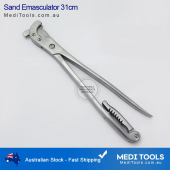
Most hand instruments, including forceps and scissors, are sized by overall length, and this number often appears in centimetres. Product specifications remain the best source for confirming an instrument’s dimensions, as the appropriate measurement can vary by instrument type and manufacturer.
Longer instruments reach deeper areas, and shorter ones give finer control in tight spaces. Compare the listed length with a tool you already own, so you know exactly how the new instrument will feel in your hand.
2. French Gauge for Tubes and Catheters
Round devices such as catheters and tubes use the French scale. One French unit equals one third of a millimetre, so you divide the French number by three to find the outer diameter. A size 9 device, for example, measures about 3 mm across. The French scale refers to the outer diameter, not the inner diameter or lumen, and a bigger French number always means a wider device.
3. Needle Gauge Works in Reverse
Hypodermic needles are commonly sized using the Birmingham gauge, and it behaves differently from the French scale. A higher gauge number means a thinner needle, so a small number points to a wider one. Because the two systems move in opposite directions, read each label with care. Write a short reminder on your order list, so a busy day never leads to a mismatched item.
4. Blade and Handle Numbers
Scalpel parts use number codes instead of centimetres, and the handle must match the blade series. For example, some scalpel systems use size 3 or 7 handles with 10-series blades and size 4 handles with 20-series blades. Always check the manufacturer's compatibility information. Each blade number also stands for a different cutting shape, so confirm the exact pairing in the product description.
How to Read Medical Instrument Measurements on a Listing
A strong product page puts the name, the size, the tip style, and the material in one place. Scan the title first, then confirm the details in the description and the specification area. Clear listings make comparison simple, and vague ones deserve a closer look before you add anything to your cart.
Use the table below as a quick guide while you shop. It shows the details worth confirming and the reason each one matters, so you can check them in seconds.
Detail to Confirm | Why It Matters | Where to Find It |
Overall length | Controls reach and handling | Product title or specifications |
Tip style | Sharp, blunt, straight, or curved tips suit different tasks | Product title or photos |
French size or gauge | Sets the width of tubes and needles | Specifications |
Handle and blade number | Prevents a poor fit | Product description |
Material | Affects durability and cleaning | Product description |
Keep this checklist open in a second tab while you compare products. Ticking off each detail one by one makes your final choice calm and well-informed.
Common Mistakes Beginners Make
Has a label ever looked right while the item arrived wrong? Many beginners assume that medical instrument sizes follow one universal rule. They do not, because lengths, gauges, and number codes each use their own logic.
These slip-ups appear most often:
● Ignoring the unit printed on the label
● Trusting a product photo more than the written dimensions
● Assuming that a similar name means a similar size
Slow down, read each label twice, and keep a record of the sizes your team commonly uses for specific procedures. A simple note turns guesswork into routine and keeps your tray consistent.
Matching Instruments to Your Daily Work
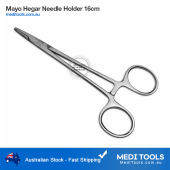
Accurate surgical instrument measurements matter most when tools work together in one setup. A needle holder should match the size and type of needle being used, and a retractor should suit the depth of the area it opens. Planning these pairs in advance prevents surprises in the middle of a procedure.
Comfort counts too. Hand size, grip style, and procedure length all affect control, so ask your team which feel they prefer before you finalise an order. When you are ready to build a matched setup, browse by instrument type and compare listed lengths side by side, so every pairing feels settled before checkout.
Frequently Asked Questions
1. How to Measure Medical Instruments?
Lay the instrument flat beside a rigid ruler and read its full length in centimetres, including the jaws and the finger rings. For round devices, measure the outer width with callipers and compare it with the French scale.
2. How are Surgical Instruments Measured?
Makers record overall length first, then add the details that matter for each tool type. Fine instruments may also list tip or bite dimensions in millimetres, while tubes and needles carry their own scale markings.
3. How to Choose the Right Surgical Instrument Size?
Work backward from the task you need to perform. Start by defining the procedure and the patient group, then narrow each tool type by length and tip style.
4. How are Medical Instruments Sized?
Sizing follows function. Tools you hold are described by their reach, devices that enter the body are described by their width, and parts that must fit together are described by number codes.
5. What Should I Do If I am Unsure About an Instrument Size?
Pause before you order and gather the facts. Share the intended use with the supplier, ask for exact dimensions, and request a photo beside a ruler when a listing looks vague.
Conclusion
Sizing does not need to feel intimidating. Once you know that length, diameter, gauge, and number codes each play a distinct role, every listing becomes easier to read. Take your time, double-check each label, and lean on knowledgeable people when something looks unclear. Confident choices today lead to smoother procedures tomorrow.
Your next tray deserves tools chosen with care and confidence. Browse the MediTools Pty Ltd catalogue with your new sizing know-how, and buy medical instrument sets that work the first time.
Disclaimer
The content provided here on the sterilization, cleaning, and reprocessing of surgical and medical instruments is strictly for informational and educational purposes only. This information is not a substitute for professional training, certification, or the manufacturer's official Instructions for Use (IFU). Sterilization is a critical, complex process that demands strict adherence to regulatory standards; improper technique can cause serious harm, including patient infection. All healthcare personnel must follow their facility's established protocols and the specific IFU for every instrument and piece of equipment. By using this blog, you agree that the author/owner holds no liability for any damages or consequences resulting from the application or misuse of this information.